


How AI and Automation Can Simplify DPDP Compliance Automation
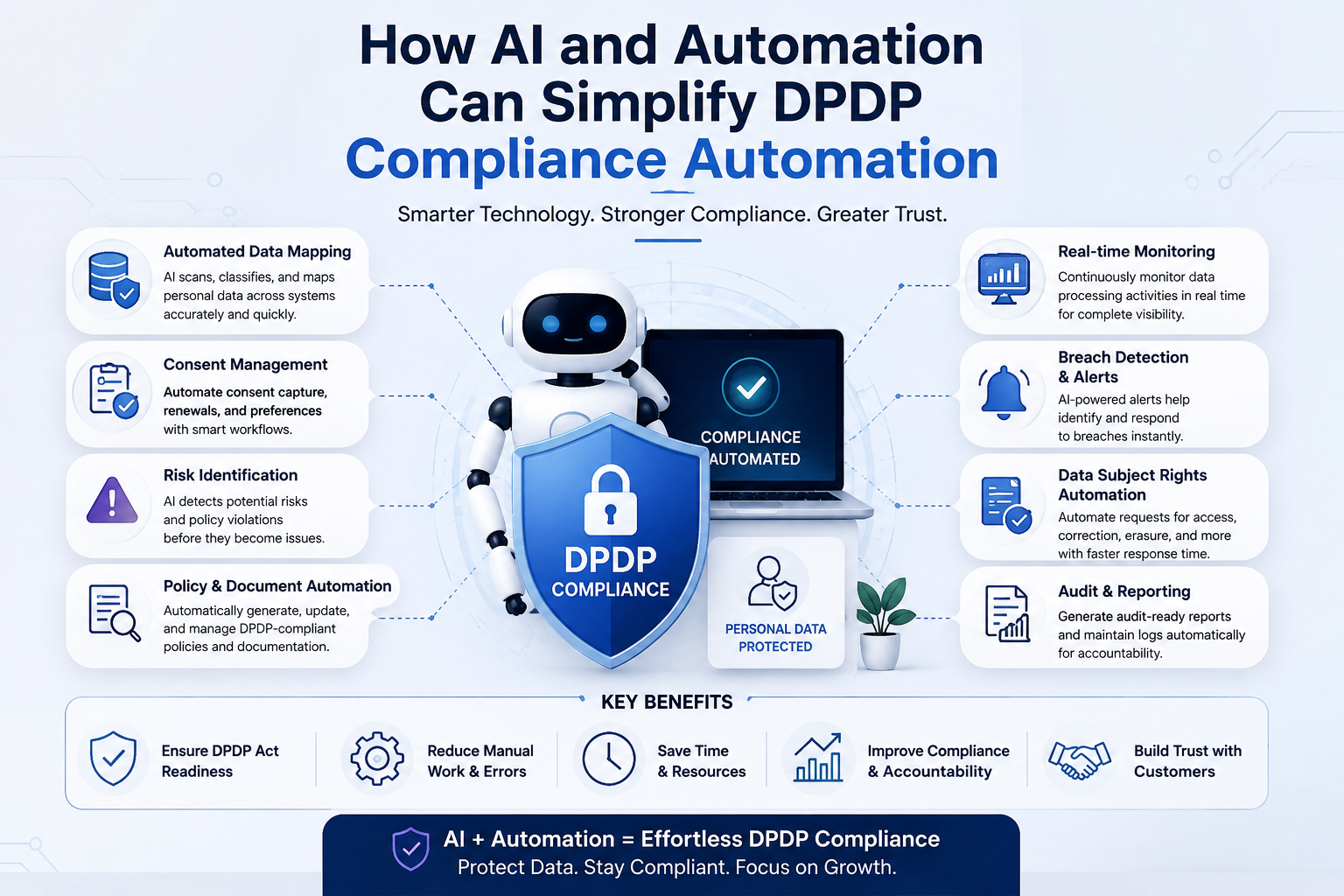
Key Takeaways
- AI-powered DPDP compliance software prevents tedious privacy and governance processes and tasks.
- Automation boosts the accuracy of consent management, data mapping, and compliance monitoring.
- Ongoing governance is necessary to meet the requirements of DPDP Act compliance.
- Technology coupled with legal insight is the perfect way for businesses to stay current with changing privacy laws.
The DPDP Act has transformed the way data is collected, processed, and handled in India. It has made compliance more than just having a privacy policy in place; it has compelled organizations to continuously monitor data, manage consent, perform risk assessment, along with governance and compliance across departments.
With increasing volumes of personal data being collected, AI and automation have emerged as key enablers of compliance as they help companies reduce manual effort while ensuring adherence to rules.
Intelligent Automation is not a replacement for legal expertise, but it enables firms to develop extensible solutions to meet the requirements of the DPDP Act 2023.
Why Manual Compliance Is No Longer Enough
For businesses with numerous privacy requirements, particularly involving customer or employee information, keeping up with them manually can be very burdensome.
Common challenges include:
- Tracking consent across multiple platforms
- Maintaining updated records of processing activities
- Identifying personal data across business systems
- Managing data principal requests
- Monitoring compliance across departments
- Keeping documentation current as regulations evolve
As the business expands, they become more complex, and so automation becomes more of a need than a convenience.
How AI Supports DPDP Compliance
AI is helping corporations with the evaluation of large datasets, uncovering regulatory risks, and optimizing mundane processes while still having humans involved in that work. AI solutions can work with:
Automated Data Discovery
AI can be used to scan databases, applications, and cloud environments to determine the location of personal data. This offers organizations increased visibility of data landscape and accurate data inventories.
Smarter Consent Management
Automated workflows increase the likelihood of capturing, updating, and managing the consent of users and provide audit trails that illustrate compliance with regulatory requirements.
Faster Risk Identification
Machine learning can identify abnormal data processing, which enables compliance teams to investigate whether there are concerns before they escalate to a bigger regulatory issue.
AI and Automation for Better Governance
Automation is not just about improving efficiency. It also enhances organizational governance, which helps to ensure better collaboration between legal, compliance, IT, HR, marketing, and leadership teams.
Automated systems offer a single point of view of privacy activity, rather than having to keep multiple spreadsheets or disjointed workflows. This facilitates quick decision making and improves accountability throughout the organization.
As for AI governance, it is crucial for organizations to have transparency, responsible data management, and privacy-by-design as essential elements of their operations. The factors are relevant in this context to the changing data privacy laws in India and on the global stage in relation to governance of AI.
Why Technology Should Be Paired with Legal Expertise
Technology accelerates compliance, but it cannot interpret legislation or replace legal judgment.
However, the organizations still need expert support in:
- Interpret regulatory obligations
- Review privacy notices
- Conduct Data Protection Impact Assessments
- Develop governance policies
- Respond to regulatory inquiries
- Monitor legal developments
Automation can be used in tandem with data privacy consulting services to create effective compliance programs that are both efficient and legally sound.
Conclusion
For organizations to be compliant with the DPDP Act, it is necessary to abide by a compliance process that extends beyond the writing of policies and documents. As an organization’s privacy obligations evolve, businesses need to be constantly monitored, have effective processes put in place, and be overseen by legal professionals. However, using automated solutions can help solve compliance issues.
Cyberra Legal Services assists organizations in integrating cutting-edge compliance technology with legal know-how to craft comprehensive and viable privacy programs that align with data protection and privacy laws in India.
FAQs
- What is the compliance tool for the DPDP Act?
A DPDP compliance tool helps organizations manage consent, data inventories, privacy assessments, policy documentation, and audit records. Many platforms also automate monitoring and reporting to simplify ongoing compliance activities.
- What is the DPDP platform?
A DPDP platform is a centralized solution that supports privacy governance by bringing together consent management, data mapping, risk assessments, and compliance reporting. It helps organizations manage privacy obligations more efficiently.
- How does DPDP affect AI development?
Organizations developing Artificial Intelligence systems must manage personal data responsibly, in accordance with the DPDP Act, requiring their systems to adhere to criteria such as seeking valid consent when necessary, using suitable protections, and maintaining appropriate security.
- What are the DPDP rules in India?
DPDP rules set obligations for organizations that process digital personal data, in the areas of consent management, obligations for data security, obligations for grievances, and obligations for accountability for digital personal data. Compliance is not a one-off exercise; it is an ongoing governance process.
- What are the five pillars of data privacy compliance?
The five core pillars generally include lawful data collection, purpose limitation, data security, transparency, and accountability. Together, these principles help organizations build effective privacy governance programs that support regulatory compliance.