


Essential DPDP Compliance Controls for Data Protection
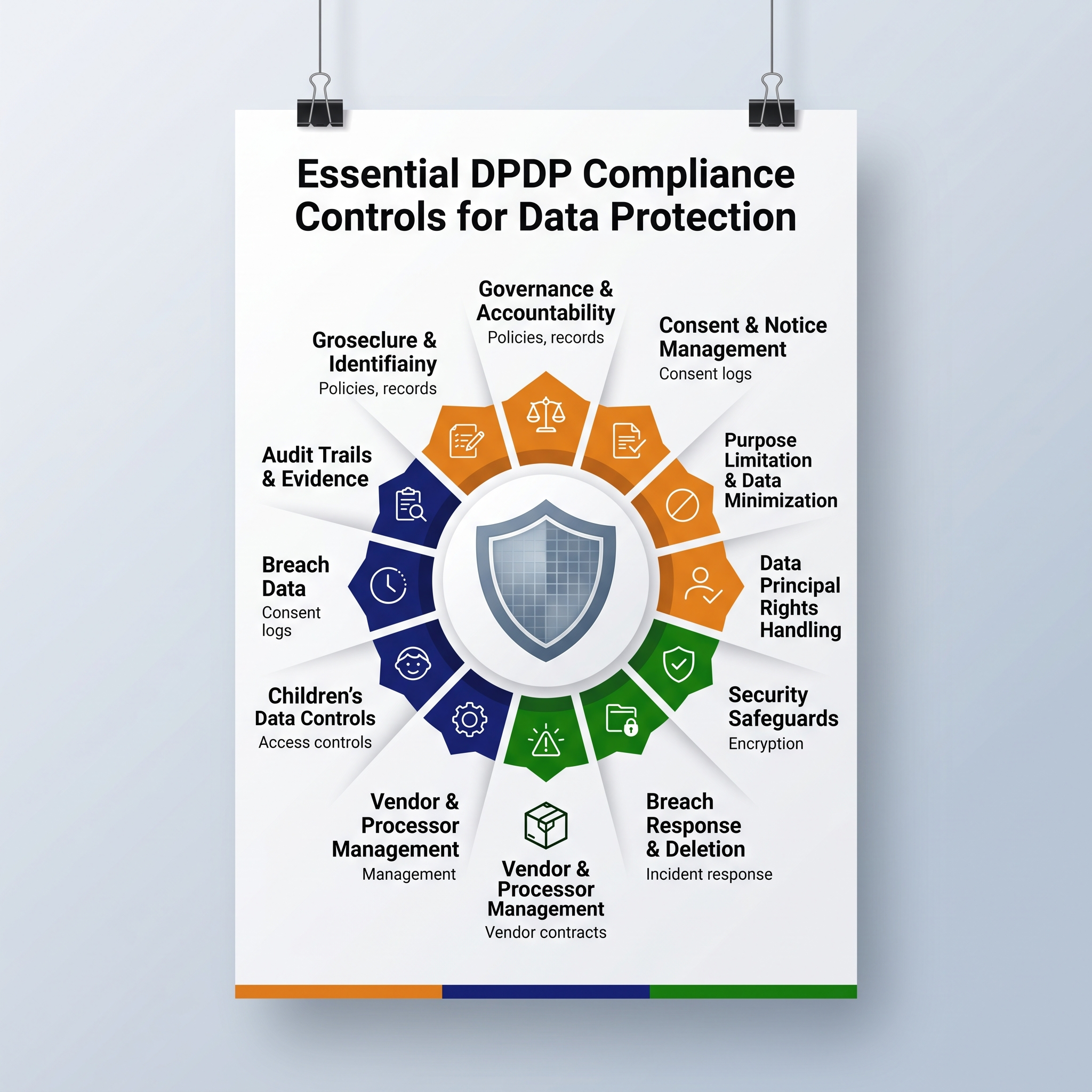
Key Takeaways
- DPDP compliance requires organizations to establish clear controls for consent, data processing, security, retention, and individual rights.
- A practical DPDP compliance checklist can help organizations identify gaps and assign responsibility for remediation.
- Data Fiduciaries should document how personal data is collected, used, stored, protected, and deleted.
- Technical safeguards such as access controls, encryption, monitoring, and incident response support broader data protection obligations.
- Compliance should be treated as an ongoing governance process rather than a one-time implementation exercise.
The scenario regarding the protection of data in India necessitates that organizations follow a systematic process when it comes to the management of personal data. The introduction of the Digital Personal Data Protection framework has defined the tasks involved in the process of collecting, processing, protecting, and managing personal data. Therefore, it is crucial for organizations to gain a thorough understanding of these requirements not only to conform to relevant legal regulations, but also to nurture ethical business practices.
A practical compliance program should combine governance policies, operational procedures, technical safeguards, employee awareness, and mechanisms for responding to data principal rights.
Understanding the DPDP Compliance Framework
The DPDP framework sets obligations for the organizations that decide the purpose and means of processing digital personal data. The Data Fiduciaries are expected to use the data for lawful purposes and comply with related requirements concerning consent, notices, security measures, and accountability.
The exact requirements applicable to an organization depend on factors such as its role, processing activities, and whether it falls within any specific category or threshold under the law.
- Establish Clear Data Governance
The first step to being compliant with the requirements of the DPDP Act is to understand what personal data is collected, and what the organization is doing with it.
Organizations should maintain an inventory of relevant data, identify processing purposes, document responsible teams, and establish policies governing collection, access, retention, sharing, and deletion.
Clear governance also helps organizations avoid collecting information without a defined business or legal purpose.
- Strengthen Consent Management
Where consent is the applicable basis for processing, organizations need appropriate mechanisms for obtaining and managing it. Consent management under DPDP Act requirements should be designed around clear communication and meaningful choice.
Businesses should be able to record when and how consent was obtained, understand the purpose associated with it, and maintain processes for responding when consent is withdrawn.
Consent records should also be managed throughout the data lifecycle rather than treated as a one-time checkbox during registration.
- Implement Appropriate Security Safeguards
Security controls form an important part of data protection compliance India initiatives. Organizations should adopt reasonable technical and organizational measures designed to protect personal data against unauthorized access, disclosure, alteration, loss, or compromise.
Depending on the organization’s environment, controls may include:
- Role-based access controls
- Encryption and secure transmission
- Multi-factor authentication
- Endpoint and network protection
- Vulnerability management
- Security logging and monitoring
- Backup and recovery procedures
- Incident detection and response
The appropriate controls should be based on the nature and volume of data, business environment, and associated risks.
- Prepare for Data Principal Rights
A strong DPDP data fiduciary obligations program should include procedures for handling requests from Data Principals.
Organizations should establish processes for receiving, verifying, tracking, and responding to applicable requests within the required framework. Employees should understand where such requests should be directed and who is responsible for handling them.
Documented workflows can make responses more consistent while reducing the possibility of requests being overlooked.
- MaintainDocumentation and Accountability
Documentation provides evidence that privacy and security controls are actually being implemented. Organizations should maintain relevant policies, consent records, processing documentation, security assessments, incident records, training information, and other compliance evidence where appropriate.
A DPDPA compliance checklist 2026 should therefore be treated as a living document that is periodically reviewed and updated as processing activities, technology, and regulatory requirements change.
Building a Practical DPDP Compliance Program
Compliance is not limited to the legal or IT department. It may involve privacy, security, HR, procurement, marketing, operations, and senior management, depending on how an organization handles personal data.
First, businesses can start by drawing out their data flows, then determining which obligations apply to them, assessing the risk, putting in adequate control measures, and constantly monitoring the impact. Collaborating with seasoned data privacy consultants or cyber security consulting firms can also assist organizations in recognizing any gaps between current methods and their compliance goals.
Organizations seeking structured guidance can also consult for support in understanding data protection and compliance requirements.
FAQs
What are the five essential pillars of data protection?
The five commonly considered pillars are governance, data minimization, security, privacy rights management, and accountability. Together, they help organizations manage personal data throughout its lifecycle.
What is the DPDP framework?
The Digital Personal Data Protection framework establishes rules governing the processing of digital personal data in India. It sets out responsibilities for Data Fiduciaries and rights for Data Principals, along with requirements concerning consent, security, and accountability.
What are the technical controls used for data protection?
Technical controls can include encryption, access management, multi-factor authentication, monitoring, vulnerability management, backups, endpoint security, and incident response systems. The appropriate combination depends on an organization’s data and risk profile.
Who is responsible for compliance with the Data Protection Act?
Responsibility generally rests with the organization acting as the Data Fiduciary for the relevant processing activities. Compliance may require coordinated involvement from management, legal, privacy, security, IT, and other operational teams.
Who needs to comply with the Data Protection Act?
Organizations that process digital personal data within the scope of the applicable DPDP framework may have compliance obligations. The specific requirements can vary depending on the organization’s role and processing activities.